June 1, 2026, marked the fifth annual Wisconsin Digital Symposium hosted by the UWEBC. The event brought together digital leaders, AI experts, and operational change drivers to share practical insights and real-world examples at the iconic Lambeau Field in Green Bay, WI.
Throughout the symposium, participants, both virtual and in person, explored how to unlock the power of digital transformation. The focus: exploring emerging technologies, implementing change effectively, and utilizing the effectiveness of AI.
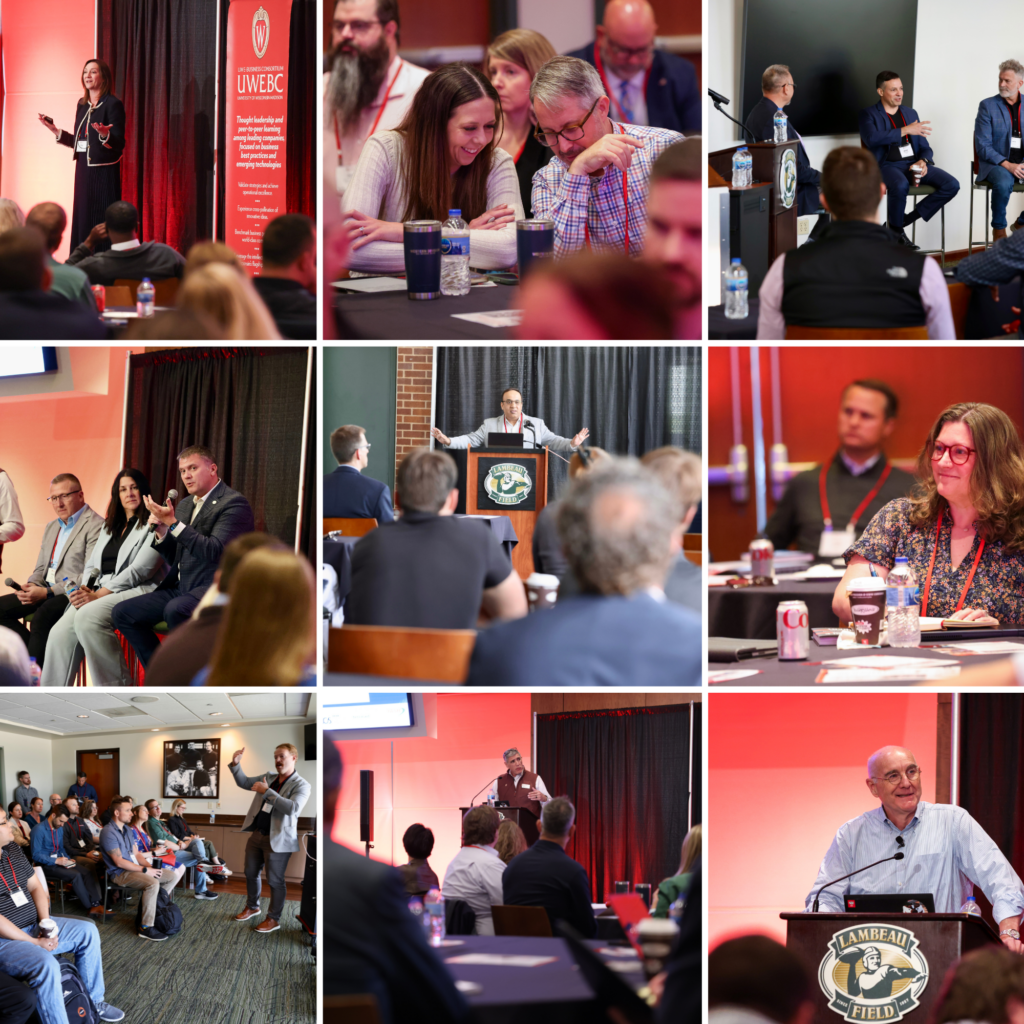
The morning began with partner case studies across three distinct tracks, allowing attendees to tailor their learning to their specific interests and needs. ThoughtFocus led a discussion on clarifying the boundaries of the AI landscape, exploring model science, augmentation, data, and AI labor. YASH Technologies focused on AI FinOps and the threat of agent chaos, while TCS hosted a panel discussion on how artificial intelligence is transforming supply chain decision-making into hyper-resilient ecosystems.

The partner case studies were followed by the symposium’s first keynote speaker, Áine Denari, who leads Brunswick’s technology strategy across one of the most complex product ecosystems in manufacturing. Denari demonstrated how AI is playing a meaningful role in pioneering digital transformation across Brunswick’s marine ecosystem, from intelligent product development to connected fleet operations. She highlighted practical AI applications, including boat-docking capabilities, automatic security, and systems that detect changing weather patterns.
Denari concluded by emphasizing Brunswick’s mindset that “Next Never Rests,” underscoring that AI is a continuously evolving process that is fundamentally transforming organizations every day.
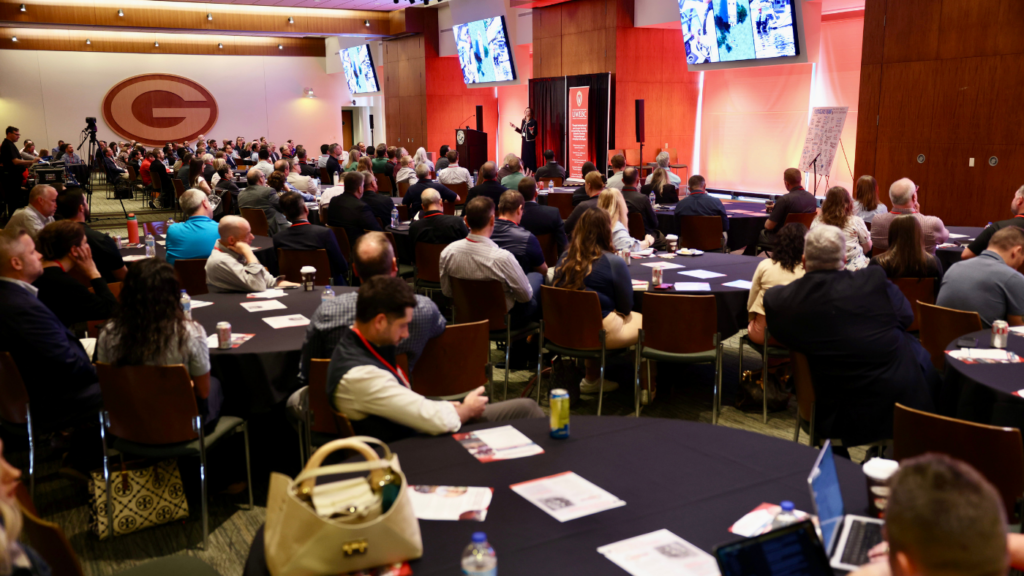
Building on the idea of digital transformation to drive measurable outcomes, our second keynote speaker, Phil Gilbert, author of Irresistible Change and CEO and CHRO advisor, explored how to effectively implement digital change.
Phil centered his talk on one notable idea: the team, not the individual, is the atomic unit of transformation when it comes to embracing digital change. He noted that AI can often become an anti-pattern: a superficially appealing process or solution that seems effective at first but ultimately creates counterproductive consequences. To implement AI effectively, Phil emphasized three primary drivers: teams, alignment, and “glue people,” or those who connect efforts across functions and help keep work moving in the right direction.
Phil also discussed a second anti-pattern many companies experience: prioritizing AI outputs over meaningful outcomes. In this scenario, AI can end up wasting resources rather than creating value. To address this, he encouraged teams to focus on clear metrics, differentiation, and human-centered approaches that ensure AI efforts are grounded in real business impact.
To implement AI effectively, Phil left the audience with one captivating question: Are your people, your practices, and your places designed to produce outcomes that your competitors — using the same models at the same price — cannot replicate?
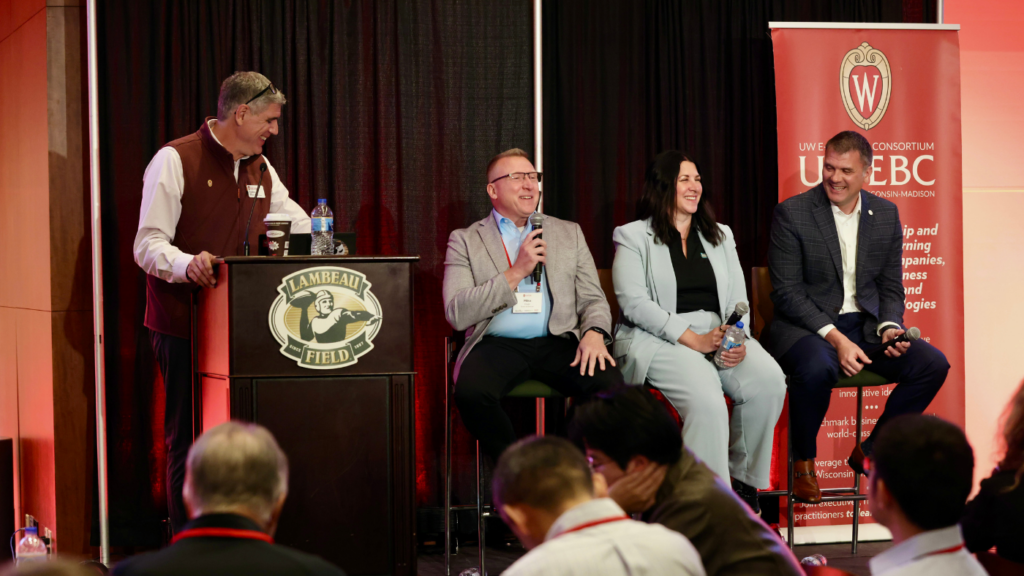
Extending the conversation around AI, transformation, and operational impact, the Digital Technology panel explored how digital tools can create meaningful value across the enterprise. The panel featured Mike Hoge (Abbott), Chad Steighner (Clarios), and Carrie Toth (Smart Care Solutions), who shared practical perspectives on how their organizations are operationalizing AI, scaling digital initiatives, and leading cross-functional change. Together, they emphasized that successful transformation requires more than implementing new tools; it depends on aligning technology with business priorities, building cross-functional trust, and creating the conditions for adoption across teams.
The event concluded with Lightning Talks from University of Wisconsin–Madison faculty members Leah Ujda, Hantang Qin, and Shaw Li, who shared research and insights on present cutting-edge work at the intersection of AI, engineering, and the future of work.
Leah Ujda highlighted how UW–Madison is helping pioneer the future workforce in digital technologies, with a focus on the College of Computing and AI’s founding and on preparing students, researchers, and industry partners for what comes next. The conversation also featured Hantang Qin, who explored what becomes possible when AI-driven precision meets advanced materials science, and Shaw Li, who discussed industry transformation through connected, intelligent mobility. Together, their perspectives underscored the powerful intersection of talent, research, and emerging technology in shaping the future of digital innovation.

This year’s symposium made one thing clear: digital transformation is no longer optional; it is essential to staying competitive. For leaders looking to continue the conversation, deepen their learning, and bring actionable ideas back to their organizations, the 2026 UWEBC Annual Business Best Practices and Emerging Technologies Conference on October 6, 2026, offers another high-impact opportunity to engage with the UWEBC Community.
Immediately following the Wisconsin Digital Symposium, attendees were invited to continue the conversation at the Wisconsin Drives Manufacturing Innovation Showcase, an interactive experience highlighting emerging ideas and opportunities to connect across industry and academia. Attendees could also take advantage of complimentary tickets to the Manufacturing Summit the following day, creating a seamless two-day experience exploring the intersection of digital strategy and manufacturing excellence.
Missed the live event? Digital passes are now available and provide immediate access to the Symposium session recordings, so you can catch up on the insights and conversations anytime.